
Signs of an Unhealthy Relationship You Should Never Ignore
Updated: Aug 13

It usually starts with a subtle, nagging gut feeling. You send a thoughtful message, and three days later, you get a generic, two-sentence reply. Or perhaps the conversation is finally getting deep, but there is suddenly an emergency that requires a small wire transfer to fix.
You did not look overseas just to become someone's perpetual pen pal. Yet, for thousands of successful Western men, the dream of finding a traditional, marriage-minded partner slowly devolves into an endless, exhausting loop of translation apps and excuses.
Before you write off that sinking feeling as just a cultural difference, look at the reality. In 2022, the Federal Trade Commission reported a staggering $1.3 billion lost to online romance scams, with the median victim losing roughly $4,400. That statistic alone tells a grim story about the current state of unverified, overseas dating.
In my 15 years as the lead matchmaker at Princess Date Matchmaking, I have spoken to hundreds of men who arrived at my agency completely burnt out. They didn't just lose money on transactional pay-per-letter dating sites; they lost their emotional bandwidth. When you are dating across borders, it is incredibly easy to excuse poor communication as a language barrier or mistake manipulation for traditional values.
Recognizing the signs of an unhealthy relationship early doesn't just protect your wallet. It protects your emotional well-being and ensures you don't waste years pursuing a connection that will never lead to a genuine, in-person marriage.
What Defines an Unhealthy Relationship in International Dating?
An unhealthy international relationship is defined by a reliance on endless virtual communication, financial micro-transactions, and emotional distance, rather than a clear, mutual progression toward an in-person meeting and marriage.
Unlike normal cross-cultural friction where two people actively work to understand each other's backgrounds, unhealthy patterns repeat themselves and slowly damage your trust. You might find yourself constantly anxious, waiting days for a reply, or feeling pressured to solve sudden logistical problems overseas.
Consider this: U.S. Department of State data shows that K-1 Fiancé Visa denial rates have hovered around 27.8% in recent years. A primary reason for these denials? The inability to prove a bona fide, genuine relationship to the consular officer. If your relationship is built on secrecy, one-sided effort, or a refusal to video chat, it is not just emotionally unsafe, it is practically impossible to transition into a legal U.S. marriage.
A healthy connection allows both partners to feel valued. When fear, financial pressure, or confusion become the baseline of your daily interactions, the relationship is no longer serving you.
1. Poor Communication Excused as a Language Barrier

A weaponized language barrier occurs when a partner uses translation difficulties to avoid deep conversations, keep interactions strictly text-based, or dodge direct questions about her life and intentions. It is entirely normal for a Slavic woman to rely on a translation app during your first few weeks of talking. It is not normal if, six months later, you still cannot have a basic real-time conversation.
Scammers thrive behind keyboards. They use the poor English excuse to avoid phone calls and mask the reality that you might be chatting with a hired agency translator rather than the woman in the photos. In a healthy international relationship, both partners actively work to close the communication gap. If she makes zero effort to learn basic phrases or actively refuses to use a live translator on a video call you are not building a marriage. You are just a pen pal.
2. Mistaking Controlling Behavior for Traditional Values

Financial manipulation disguised as tradition happens when a partner expects you to solve her daily logistical problems (rent, broken phones, sick relatives) before you have ever met in person, using your desire to be a provider against you.
Many Western men look overseas specifically for traditional gender roles. You want to be the protector and the provider. Scammers know this intimately. They exploit your desire to be the hero by manufacturing constant, urgent crises.
A genuinely traditional Ukrainian woman respects a man's resources; she does not treat his bank account like an ATM. I constantly remind my clients at Princess Date Matchmaking, a traditional wife wants a leader, not a sugar daddy. If she is guilting you for not sending a wire transfer, or acting cold and withdrawn when you refuse to pay for a sudden emergency, that is control. It is not culture.
3. Emotional Distance and Refusal to Video Chat

The endless virtual loop is a dynamic where a partner sends highly affectionate, romantic text messages but suddenly becomes unavailable, shy, or experiences technical difficulties the moment you ask for a live video date. Let me be blunt. If she cannot get on a Zoom or Skype call with you today, she is hiding something.
Real emotional connection requires eye contact, body language, and shared time. When a woman constantly claims her camera is broken, she is at work, or she is "too shy" for video, you are almost certainly dealing with a pay-per-letter platform milking you for chat credits. A woman who is genuinely marriage-minded and preparing to immigrate wants to actually see the man she is going to spend her life with. If the relationship exists entirely in a text box, it is an illusion.
4. Financial Pressure and the Pay-Per-Letter Trap

The pay-per-letter trap is a manufactured dynamic where a woman's continued affection is strictly tied to your willingness to purchase chat credits, virtual gifts, or translation services through a third-party platform.
Authentic matchmaking does not monetize your conversations. If you are spending hundreds of dollars a week just to text a woman who refuses to share her direct WhatsApp number, you are being scammed. A real Slavic woman looking for a husband wants direct contact. She wants to know you, not drain your credit card through a dating site's interface. If she gets defensive or claims it is against the rules when you ask to move off the platform, walk away immediately.
5. Secrecy Regarding Her Background or Intentions
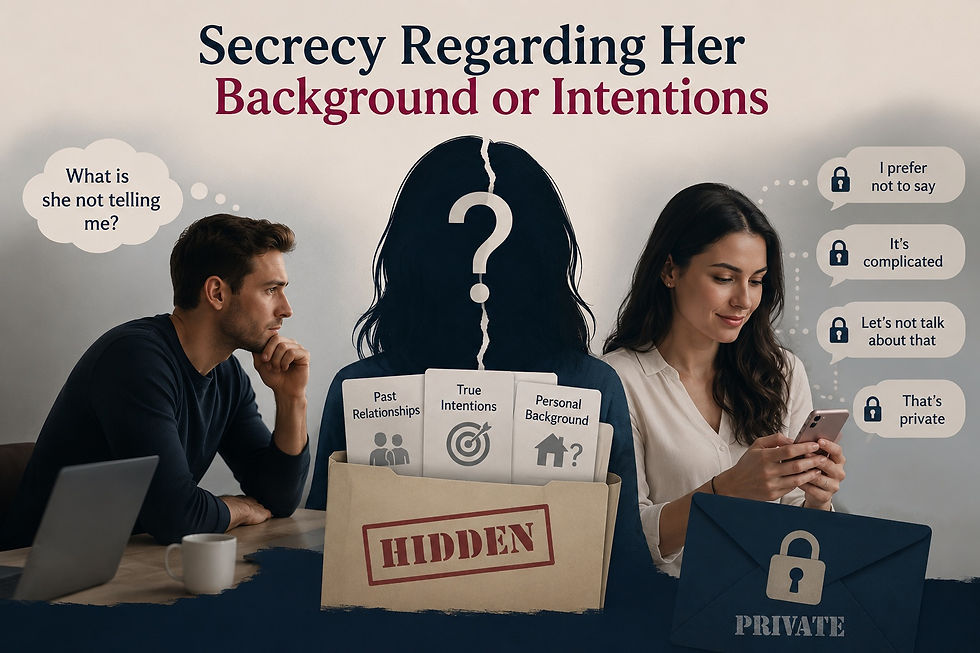
Vetting resistance occurs when a woman refuses to provide basic, verifiable information about her marital status, living situation, or employment, often claiming you are violating her privacy.
In international dating, trust requires verification. When you work with Princess Date Matchmaking, we conduct strict background checks before the very first introduction. In the wild west of online dating, you must do this yourself. If she is highly secretive about her past relationships or refuses to connect on standard social media, she is hiding something. A woman serious about the K-1 visa process knows her background will be rigorously investigated by the U.S. government anyway. Transparency is non-negotiable.
6. One-Sided Effort in Planning the First Meeting
The perpetual delay is a stalling tactic where a partner enthusiastically talks about your future together but completely avoids taking concrete, logical steps to meet in person.
Talk is cheap. Flights are not. A healthy cross-cultural relationship moves progressively toward a physical meeting.
If you are doing 100% of the planning, researching visa requirements, and suggesting travel dates, while she responds with vague excuses ("Maybe next year," "Let's wait until my sister moves"), you are dealing with a phantom. She enjoys the attention and emotional validation of a Western man, but she has zero intention of actually leaving her home country.
7. Walking on Eggshells Around Travel Timelines

Timeline manipulation happens when a partner uses guilt, anger, or silence to punish you for asking legitimate questions about travel logistics or visa paperwork. The international immigration process is stressful. It requires absolute teamwork. If asking about her passport status triggers a fight, or she accuses you of pressuring her when you bring up flight logistics, the dynamic is toxic. You should never feel afraid to discuss the practical reality of how you are going to close the distance. If she makes you feel guilty for trying to move the relationship forward, she is controlling the narrative.
8. Constant Criticism and Unrealistic Lifestyle Demands
The lifestyle extraction mindset occurs when a woman’s focus shifts entirely from building a family with you to demanding a specific, luxury American lifestyle she expects you to fund upon arrival.
Yes, Western men are often viewed as excellent providers, and traditional women appreciate that security. However, a genuine Slavic woman values the family unit above a designer handbag. When you browse the profiles of our verified Slavic brides, you are looking at women who have been screened for family values, not financial extraction. If her questions revolve primarily around the size of your house, your car brand, or what kind of allowance she will receive, you are not interviewing a future wife. You are interviewing an employee. Constant comparisons to wealthier men are a massive red flag.
9. Agency Interference and Manager Mediators
Third-party interference is the heavy involvement of a dating site manager or translator who actively coaches her responses or dictates when and how you are allowed to communicate.
This is the darkest side of the international dating industry. If her tone suddenly changes depending on the time of day, or if she claims she needs her manager's permission to exchange contact details, you are not dating a woman. You are dating an agency. You can read through our client testimonials to see the relief men feel when they finally experience direct, unmediated communication. If there is constantly a third person mediating your relationship, it is an unhealthy illusion.
Normal Cultural Friction vs. Unhealthy Relationship Dynamics
It is easy to confuse a cultural misunderstanding with a toxic red flag. Slavic communication is notoriously direct; Americans are heavily conditioned to use softeners. A blunt text message does not necessarily mean she is angry or controlling it might just be a direct translation.
Here is exactly how to tell the difference between normal cross-cultural friction and a relationship that is fundamentally unsafe:
Normal Cultural Friction | Unhealthy & Toxic Dynamics |
Direct Communication: She gives blunt, unvarnished opinions without American small talk or sugar-coating. | Constant Criticism: She routinely belittles your appearance, finances, or intelligence. |
Traditional Expectations: She expects you to lead the date, plan the logistics, and open doors. | Financial Manipulation: She expects you to send money for rent, internet, or sudden emergencies before meeting. |
Language Frustration: Occasional misunderstandings that you both actively work to clarify via video or translators. | Weaponized Language: Refusing to learn English, refusing video calls, and keeping you strictly in a text box. |
Protective Family: Her family asks direct questions about your ability to provide and care for her. | Secrecy: She refuses to tell her family about you, or hides her real living situation. |
How Distance and K-1 Visa Stress Hide Toxic Patterns
Distance is the ultimate camouflage for bad behavior. When you only see someone through a curated screen for an hour a day, it is incredibly easy for them to hide controlling tendencies, explosive anger, or a secret double life.
Furthermore, the K-1 Visa process naturally creates a power imbalance. Because the Western man is the sponsor, he holds the logistical power, while the woman holds the emotional power (the ability to delay or cancel). Toxic partners will weaponize this stress, picking fights right before a major paperwork deadline to test your compliance. Do not romanticize this struggle. If the process of bringing her to your country is tearing you apart before she even arrives, the marriage will not survive the reality of living together.
How a Certified Matchmaker Eliminates Online Dating Scams
You do not have to navigate this minefield alone. The reason Western men get trapped in unhealthy international relationships is that they are relying on unverified dating apps designed to keep them chatting, not to get them married.
Our job is to completely remove the guesswork. We do the background checks and facilitate the direct video introductions. I ensure that the woman sitting across from you shares your values and is legally and emotionally ready to build a life in your country.
Stop wasting your emotional bandwidth on pen pals, pay-per-letter scams, and women who refuse to get on a video call. If you are ready for your last first introduction, register for a confidential matchmaking consultation today, and let's find your future wife.


Comments